
If you’ve ever driven past a construction site and wondered what actually goes into building roads, homes, or commercial spaces, it all comes down to materials.
And not just any materials: the right materials.
From the ground beneath your feet to the surface you drive on, each component plays a specific role in ensuring a project is strong, stable, and built to last.
Let’s Start With the Essentials
Every construction project relies on a core group of materials that serve as the foundation (literally and structurally). Here’s a breakdown of what you’ll see used most often and why they matter.
Aggregates: Where Every Project Begins
Think of aggregates as the backbone of construction.
They include materials like crushed stone, gravel, sand, and recycled blends, and they’re used in nearly every phase of a project.
You’ll find aggregates in:
- Road and driveway base layers
- Concrete and asphalt mixes
- Drainage systems
- Site preparation and grading
Without high-quality aggregates, everything built on top becomes less stable.
Concrete: The Go-To for Strength
When durability is non-negotiable, concrete is usually the answer.
It’s used across almost every type of construction because it can handle heavy loads and harsh conditions.
Most common applications:
- Foundations and footings
- Sidewalks and curbs
- Structural slabs and walls
- Bridges and infrastructure
It’s one of the most versatile and dependable materials in the industry.
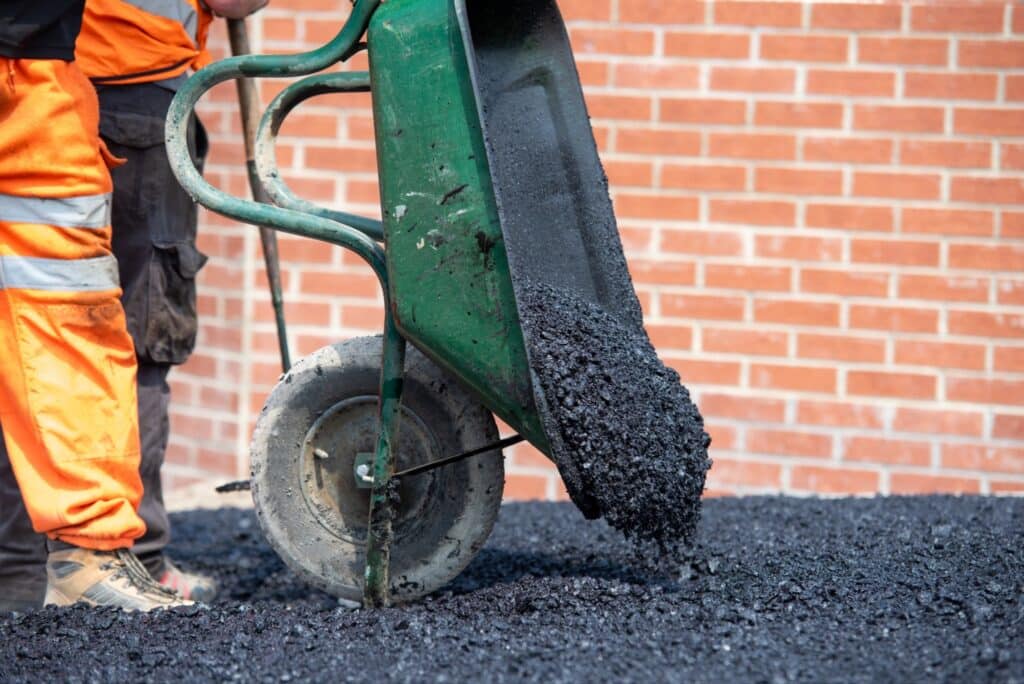
Asphalt: Smooth, Durable, and Efficient
Asphalt is what gives roads, parking lots, and driveways that clean, finished look, but it’s more than just appearance.
It’s designed to perform.
Why contractors choose asphalt:
- Handles temperature changes well
- Cost-effective to install and maintain
- Provides a smooth, safe surface
The quality of the mix directly impacts how long it lasts.
Recycled Materials: Smart and Sustainable
Construction is evolving, and sustainability is becoming a bigger priority.
Recycled materials like crushed concrete and asphalt millings are now widely used across projects.
Why they’re gaining popularity:
- Reduce environmental impact
- Lower overall project costs
- Perform well as base and fill materials
When processed properly, recycled materials can be just as effective as new ones.
Fill Materials: Setting the Stage
Before anything gets built, the ground has to be properly prepared.
That’s where fill materials come in.
They’re used to:
- Level uneven surfaces
- Stabilize the ground
- Create a solid base for construction
Poor fill = long-term structural issues. It’s that important.
Sand: The Unsung Hero
It might not get much attention, but sand plays a key role in construction.
You’ll see it used in:
- Concrete and mortar mixes
- Paver installations
- Backfilling and leveling
It helps bind materials together and creates smooth, even surfaces.
So… How Do You Choose the Right Materials?
Here’s the truth: there’s no one-size-fits-all answer.
The right materials depend on your project’s specific needs.
Key factors to consider:
- Load and structural requirements
- Weather and environmental conditions
- Project size and scope
- Budget and timeline
Choosing the wrong material, or low-quality materials, can lead to costly problems down the line.
The Bottom Line
Strong projects start with smart material choices.
Whether you’re building a roadway, developing a commercial property, or preparing a residential site, the materials you use will directly impact performance, durability, and long-term success.
At Laney Construction Materials, we supply high-quality aggregates, recycled materials, and construction essentials to support projects of all sizes. Our team helps ensure you get the right materials—every time.Contact us today to get the materials you need to build with confidence.